There is no single leg press machine weight without plates that applies to every model. To find out what you are pushing before adding weight, check the manufacturer’s unloaded starting resistance. The weight of the whole machine, the mass of its moving sled, and the resistance at your feet are different things.
This becomes confusing when you try to record a set. You know which plates you added, but should you count the sled too? And what if the only number on the product page is its maximum capacity?
You can keep an accurate record without guessing. The first step is knowing what each number describes.
Machine Weight, Sled Weight and Starting Resistance
A specification headed “weight” needs context. It might describe the equipment being delivered to your home, rather than the load you move during a set.
|
Term
|
What it describes
|
What it means for your log
|
|
Total machine weight
|
The complete equipment, including the stationary frame and moving parts
|
Do not add it to your lifting total
|
|
Leg press sled weight
|
The mass of the moving carriage assembly, as defined by the manufacturer
|
Include it only if verified and your log records sled-plus-plate mass
|
|
Starting resistance
|
The manufacturer’s stated resistance before extra loading, for a specified setup
|
Record it using the manufacturer’s wording and units
|
|
Maximum load capacity
|
The loading limit specified for the machine
|
It is not the sled weight or unloaded resistance
|
For example, a high capacity tells you nothing by itself about how heavy the empty sled feels. Likewise, an “empty leg press machine weight” listed for shipping may include a substantial frame that stays on the floor.
One detail helps keep the terminology straight: kilograms measure mass, while force is measured in newtons. If an equipment specification expresses resistance in kilograms or pounds, check what that figure represents rather than assuming it is a direct measurement of force at the footplate.
Why Do Leg Press Machines Feel Different?
The same plates can produce different resistance on different machines because the load moves through different mechanisms. NASA’s explanation of simple machines describes how inclined planes, levers, and other mechanisms change the force or direction needed to move a load.
Before comparing numbers, identify the type of leg press you are using.
|
Machine design
|
What to check
|
|
Inclined plate-loaded sled
|
Sled mass, rail angle, and any published starting resistance
|
|
Vertical plate-loaded sled
|
Its own unloaded specification; do not apply a 45-degree calculation
|
|
Lever-style leg press
|
The manufacturer’s resistance information for the lever mechanism
|
|
Selectorised leg press with a weight stack
|
The selected stack setting and how the manufacturer defines the displayed load
|
On a weight-stack machine, “without plates” can be misleading. There may be no loose plates to add, but you still select resistance using the stack. Record the selected setting and machine model rather than applying a sled-weight estimate.
What the 45-Degree Angle Changes
A 45-degree leg press sled travels up an incline rather than straight upwards. Part of its weight acts along the rails.
Under an ideal calculation with no friction or assistance, the gravity component along a 45-degree incline is about 70.7% of the moving load’s vertical weight.
That does not mean you should multiply every leg press number by 0.707. It is an explanation of the angle’s effect, not a measurement of your machine. Friction and acceleration affect the force required, and an assistance mechanism would need separate consideration. A manufacturer’s published starting resistance may already account for the machine’s design.
How to Find Your Leg Press Starting Weight
Look for the model number on the machine, then find its manual or specification sheet. Search for “starting resistance”, “unloaded resistance”, “carriage weight,” or “sled weight”, and read the definition beside the number.
Specifications and starting resistance vary between leg press machines. Use information for the exact model and version, including the exercise configuration where relevant.
A Capacity Figure Is Not a Starting Weight
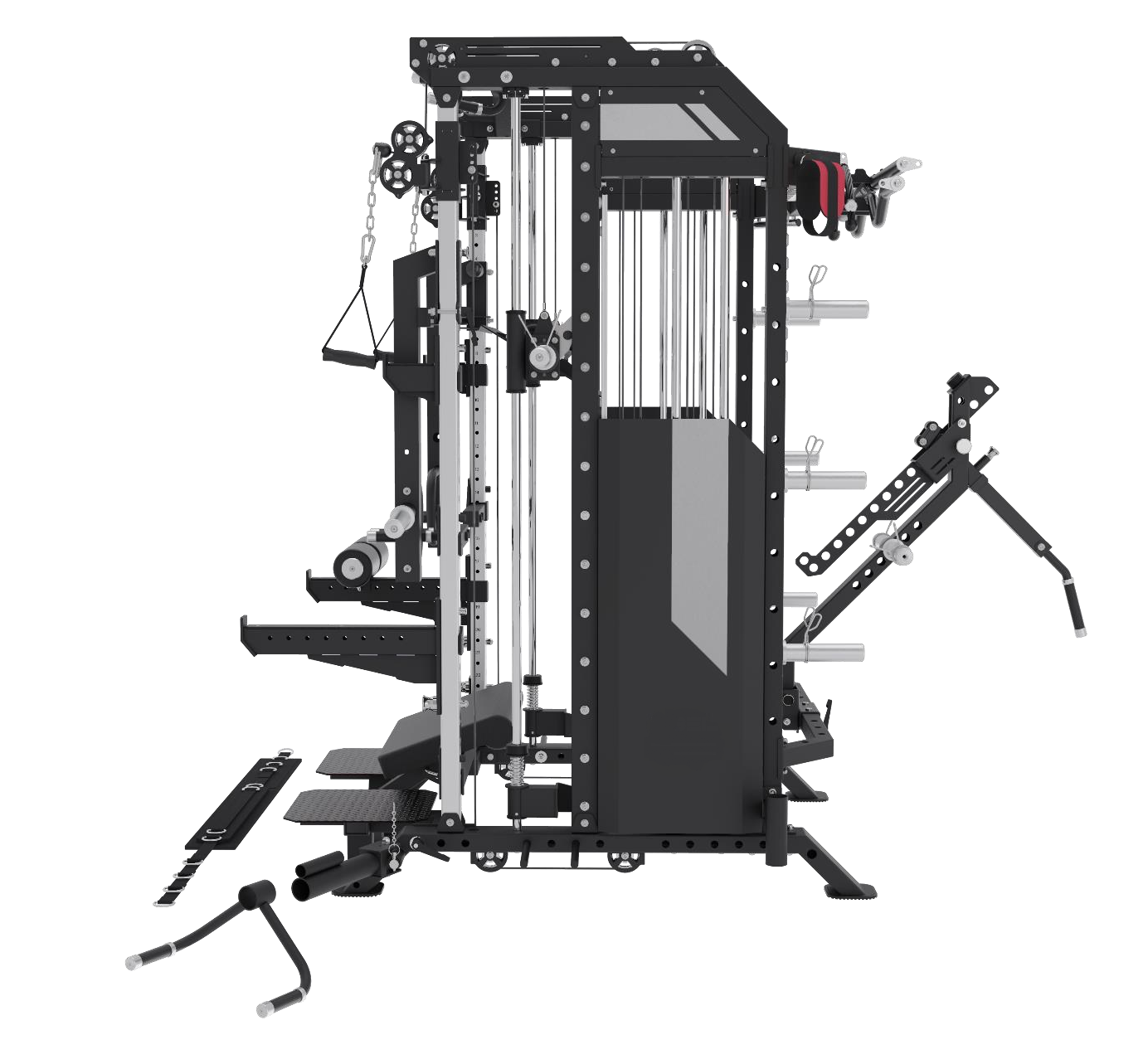
Our Elite45° Leg Press Hack Squat listing gives an 850 lb (386 kg) capacity. It does not currently publish a separate sled mass or unloaded starting resistance.
The 386 kg figure therefore cannot answer how much this machine weighs without plates. We would need a separate confirmed specification for that.
What to Ask When the Figure Is Missing
Give the supplier or manufacturer the model number and ask:
What is this model’s unloaded starting resistance in leg press mode? Is the figure the physical sled mass or resistance at the footplate, and what setup does it apply to?
If you use the machine at a gym, staff may be able to locate its documentation.
While you wait for confirmation, record added plates only and note that starting resistance is unknown. You can still track changes on the same machine when your setup and logging method stay consistent.
An unloaded machine can offer resistance even with no plates attached. For exercise instructions, see our guide to how to perform the leg press correctly.
Does Leg Press Weight Include the Sled?
It depends on what the number is intended to record. A plates-only entry excludes the sled. A sled-plus-plates entry includes its verified mass. Both can be useful, provided you label them clearly and use the same method each time.
For everyday logging, recording the plates you added is straightforward, especially when the sled mass is unavailable. Adding an assumed sled weight does not make the entry more accurate.
If the manufacturer provides starting resistance rather than sled mass, record that separately. Do not automatically add it to plate mass: the two figures may describe different quantities, and the mechanism determines how added plates affect resistance.
How to Calculate and Track Leg Press Weight
Once you choose a logging method, the arithmetic is simple. Count all plates on the working loading pegs, across both sides. Plates on storage pegs attached to the stationary frame do not belong in that total.
1. Calculate the Added Plates
Suppose you load two 20 kg plates on each side:
Left side: 40 kg + right side: 40 kg = 80 kg of added plates.
Your entry would be “80 kg, plates only”, alongside the machine’s name.
If you later add one 5 kg plate to each side, the added plate total becomes 90 kg. You have added 10 kg of plates on that machine; you have not established the force at your feet.
2. Include Sled Mass Only When Confirmed
For a straightforward plate-loaded sled:
Combined moving mass = verified sled mass + added plate mass.
As a hypothetical example, a 40 kg sled carrying 80 kg of plates has a combined mass of 120 kg. This is an arithmetic example, not a Trojan specification.
You could log it as “120 kg including a 40 kg sled”. It describes combined mass, not measured resistance at the footplate.
3. Keep Enough Detail to Repeat the Setup
A clear record might look like this:
|
Detail
|
Example
|
|
Machine
|
Exact model or gym machine ID
|
|
Exercise
|
Leg press
|
|
Added plates
|
80 kg total; 40 kg per side
|
|
Logging method
|
Plates only
|
|
Starting resistance
|
Unknown
|
|
Setup
|
Backrest setting 3; no bands
|
|
Set record
|
Repetitions completed in each set
|
Avoid changing between plates-only and sled-inclusive entries without noting it. Otherwise, a higher number may reflect a different recording method rather than more weight on the machine.
When you change machines, start a separate record. Matching plate totals are not enough to make the two entries directly comparable.
Check Plates and Any Added Resistance
Before loading, check the plate sizes your machine accepts and any instructions for sleeves or adaptors. The Trojan Elite45 listing states compatibility with standard and Olympic plates. Our guide to standard vs Olympic weight plates explains the basic sizing difference.
The Elite45 also has power-band pins. If you use bands as permitted by the machine’s instructions, note their type and attachment setup separately in your log. The product listing describes band resistance as variable, so a band should not be treated as a fixed extra plate weight.
A note such as “80 kg plates, with bands” is more useful than assigning the bands an unsupported kilogram value. For repeatable records, identify the bands and setup rather than relying on colour alone.
Need Help Checking a Leg Press Specification?
If you are choosing a leg press for your home gym or studio, ask about unloaded resistance as well as capacity. Send our team the model you are considering and tell us which figure you need clarified.
You can visit Trojan Fitness at 8/200 Winton Road, Joondalup, WA, call 1300 876 526, or email sales@trojanfitness.com.au. We supply fitness equipment Australia-wide.
FAQs
Should I Log Zero When There Are No Plates?
Yes, if the field records added plates. Write “0 kg added plates” and include the machine name. This does not mean the machine offers zero resistance. On a selectorised machine, record the selected stack setting instead.
Why Do Online Sources Give Different Empty Leg Press Weights?
They may refer to different models or different measurements. One number might be physical sled mass, another starting resistance, and another the complete machine’s weight. Check the model, units, and definition before using a figure.
Can I Use the Same Weight Record for Leg Press and Hack Squat Modes?
Keep separate exercise entries, even on a combination machine. Record which configuration you used and check whether the manufacturer gives separate resistance information for each mode. Our guide explains the differences between leg presses and hack squats.
Disclaimer:
The content on this blog is shared for general information only and is not meant to replace professional or medical advice. While we do our best to keep everything accurate and up to date, we can’t promise that all information is complete or fully reliable at all times. Any action you take based on this content is your own responsibility. It’s always a good idea to speak with a qualified professional before making major changes to your diet, workout routine, or lifestyle. We are not liable for any issues or outcomes that may come from using the information provided here.
 All Payment Methods are Accepted