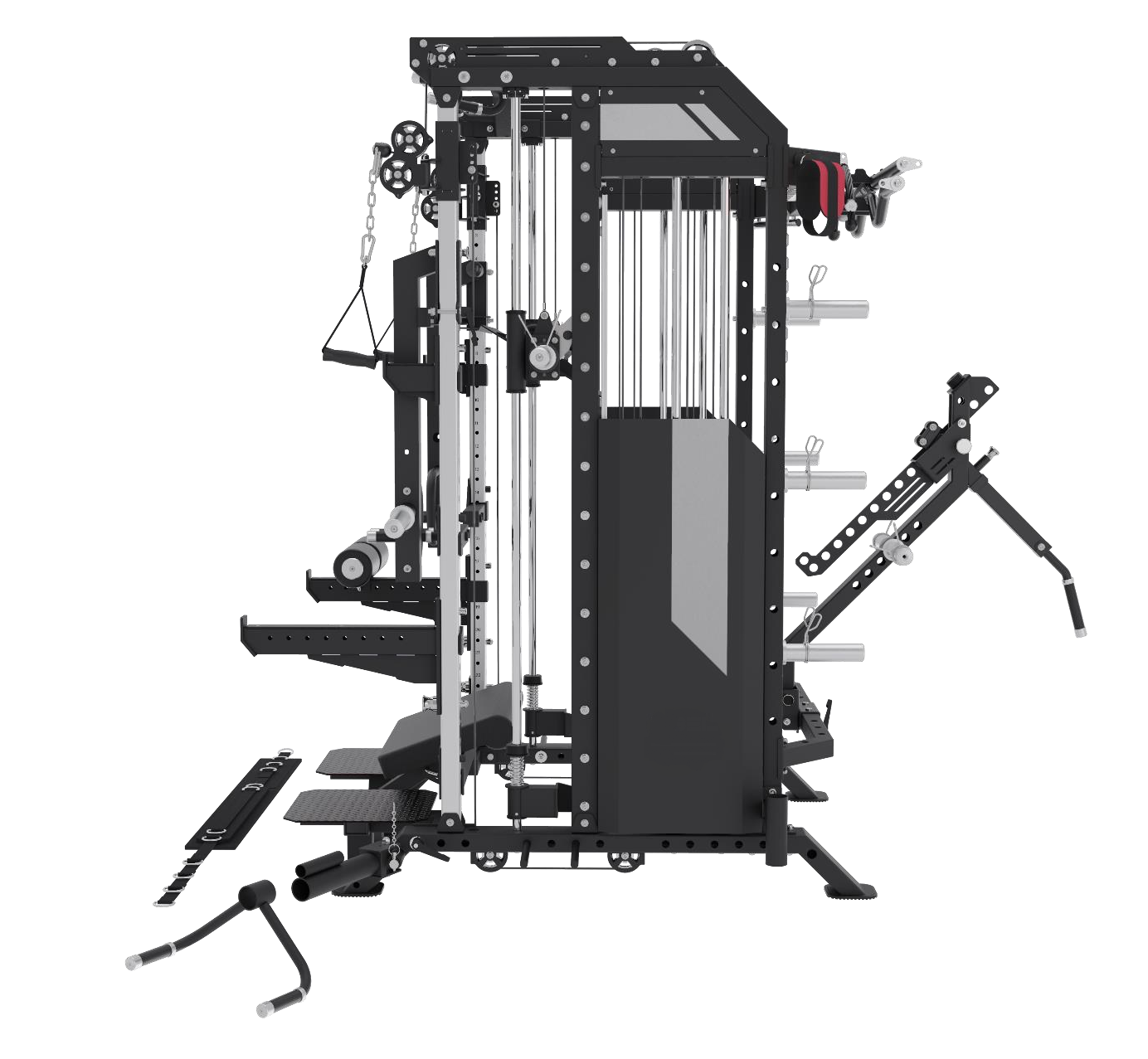
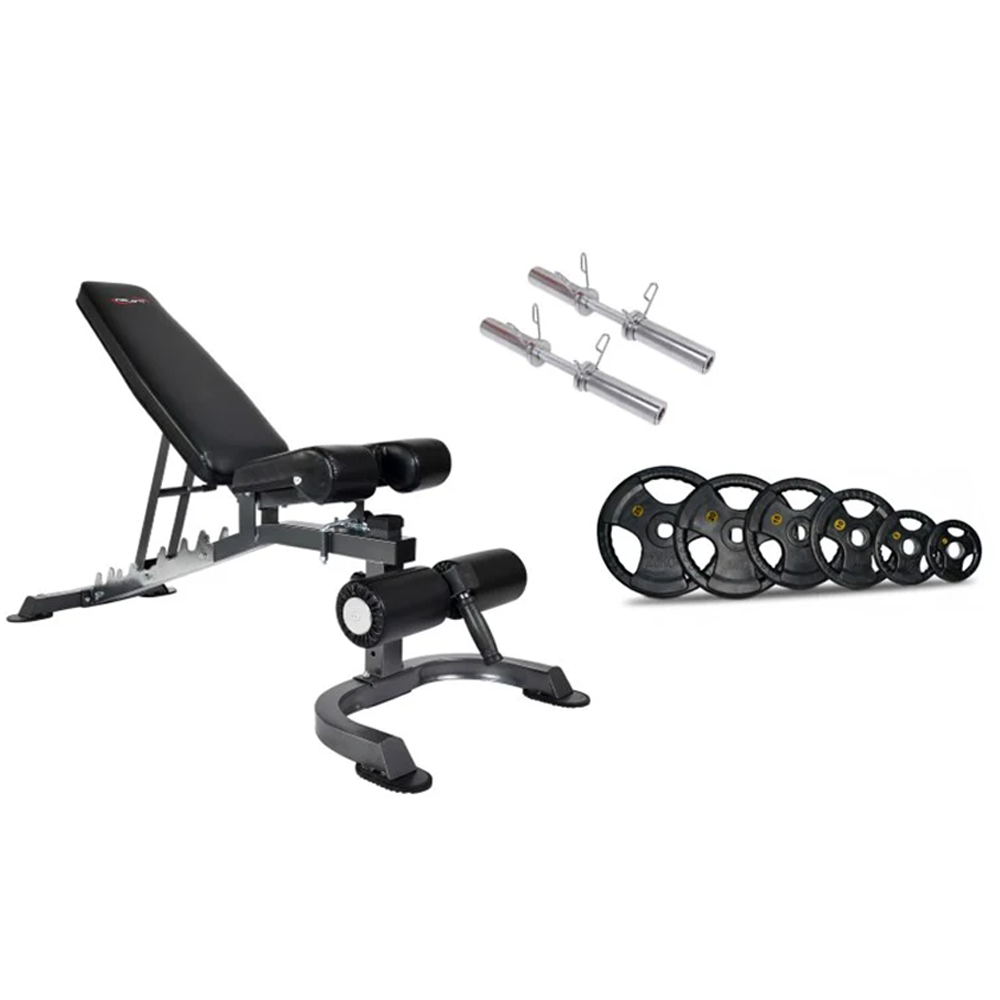
Your home gym needs a little care in return. Wipe your equipment down after every session, give it a quick safety check before you train, and follow your owner’s manual for deeper jobs like lubrication and bolt checks.
If something looks damaged, sounds wrong or moves in a way it shouldn’t, stop using it and get help.
Keep one thing in mind as you read. A clean machine isn’t automatically a safe machine. Cleaning protects surfaces, while inspections protect you, so a good routine needs both.
What Your Home Gym Maintenance Checklist Should Cover
A good home gym maintenance checklist has five jobs:
-
Clean each surface with the right product for its material
-
Inspect moving and load-bearing parts before you use them
-
Care for components as your manual directs, such as lubrication or tension checks
-
Protect equipment from moisture, heat and dust
-
Record what you checked, what you found and what you did about it
Here’s a simple gym equipment maintenance schedule you can adapt. Your manual always wins if it says something different.
|
When
|
What to do
|
Why it matters
|
|
After every session
|
Wipe sweat off grips, pads, handles and consoles
|
Sweat is salty and slightly acidic, so it eats into finishes and stitching
|
|
Before every session
|
Quick look at cables, pins, collars, pads and the floor around you
|
Most failures show warning signs first
|
|
Weekly
|
Deeper clean, vacuum dust and check for rust spots
|
Dust and moisture work their way into moving parts
|
|
Monthly or as your manual states
|
Check fixings, belt alignment and lubrication needs
|
Intervals vary by model, so follow the manual
|
|
After moving equipment
|
Full inspection before use
|
Transport and reassembly can loosen or misalign parts
|
Moving house? Take extra care. Moving within Australia doesn’t void your warranty by itself, but damage caused by relocation, improper transport or reassembly isn’t covered as a manufacturing defect.
How to Clean Gym Equipment at Home
Use mild soapy water or a gentle, non-abrasive cleaner on a microfibre cloth, then dry everything properly. That simple rule covers most equipment.
What you should avoid is just as important:
-
Bleach, ammonia and acetone, which can crack vinyl and dull powder coat
-
Scourers and abrasive pads, which scratch coatings and open the door to rust
-
Spraying liquid directly onto consoles, so spray the cloth instead
-
Leaving anything wet, because moisture is what causes rust
How to clean rubber dumbbells and plates
Rubber-coated dumbbells and bumper plates only need a damp cloth with a little mild detergent. Wipe, rinse the cloth, wipe again and dry. Harsh solvents can make rubber chalky or sticky over time, and that “new gym smell” fades on its own with good airflow.
How to clean a weight bench
Your bench upholstery takes the most sweat in the whole gym. Wipe it down after every session with a mild cleaner, then dry it.
Keep an eye on the seams. Once vinyl splits, sweat gets into the foam and the damage speeds up. Small tears are much easier to deal with early.
Steel, chrome and powder-coated frames
Painted and powder-coated frames, racks and handles clean up with a damp cloth. Bare steel, such as a barbell sleeve or knurling, is different. Use a stiff nylon brush to lift chalk and grime, then apply a very light coat of oil if your manual recommends it.
Keep brass brushes for bare steel knurling only. Never use them on chrome or coated surfaces, because they can scratch the finish.
Cardio machines and Pilates reformers
For treadmills, bikes and rowers, unplug the machine first where it has power. Then wipe the frame, the handles and the area around the deck. Vacuum dust from underneath and around the motor cover. Don’t open the motor cover unless your manual tells you to, and always unplug the machine first if it does.
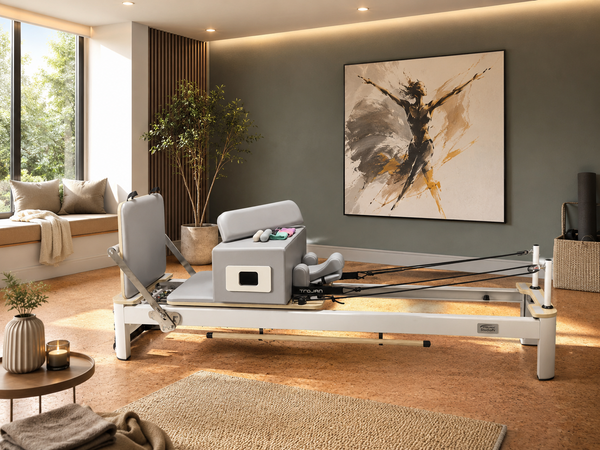
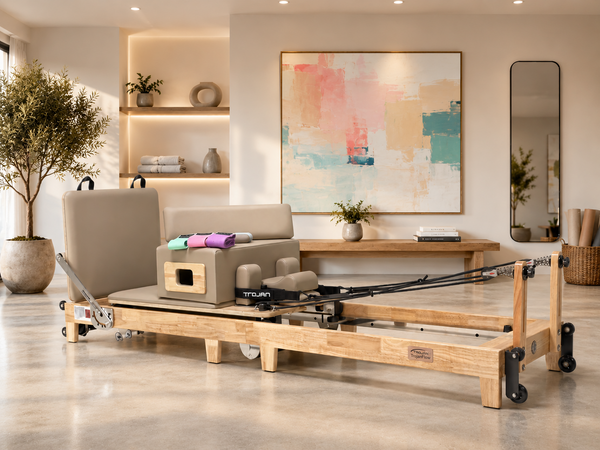
On a Pilates reformer, wipe the carriage, footbar and straps, and keep the rails free of dust so the carriage glides smoothly.
Gym Equipment Safety Inspection Checklist
Before each workout, take 60 seconds to look over the parts that carry load or move. You’re looking for damage you can see, hear or feel.
-
Cables: fraying, kinks, flat spots or bulges anywhere along the length
-
Pulleys: wobbling, cracking or grinding as the cable runs
-
Pins, collars and safety arms: fully engaged, straight and not bent
-
Frames and welds: cracks, unusual bends or flaking around joints
-
Bench adjusters: locking firmly in every position
-
Upholstery: splits, loose padding or exposed foam
-
Plates and dumbbells: cracks, loose heads or damaged inserts
-
Treadmill: belt sitting centred, safety key working, power cord undamaged
-
Reformer: springs not overstretched, ropes and loops not frayed
If a bolt looks loose, check the manual before tightening it. Some fixings need a specific torque, and overtightening can cause its own damage.
Lubrication and Periodic Care: Let the Manual Lead
Not all gym equipment needs lubrication, and the right product varies from machine to machine. This is where people get into trouble with a “one product fits all” approach.
Some treadmills need silicone lubricant under the belt at set intervals, while others use maintenance-free decks. Guide rods on selectorised machines may need a specific lubricant or none at all. Using the wrong product can attract dust, damage belts or cause slipping.
So here’s our advice. Find the care section in your owner’s manual and follow its intervals and products exactly. If you’ve lost the manual, contact us with the model and serial number. It’s also worth reading Trojan Fitness’s warranty terms before arranging any repairs, because coverage is based on normal use in line with the manufacturer’s care instructions.
If your treadmill manual specifies silicone, check whether our treadmill silicone lubricant meets the manufacturer’s requirements before you use it.
How to Prevent Rust on Gym Equipment
Rust starts with moisture, sweat and salt, so the best prevention is keeping equipment dry, clean and indoors.
Australian conditions make this extra important. Garages heat up in summer and cool down overnight, which creates condensation. If you live near the coast, salty air speeds up corrosion on any exposed steel.
A few habits make a real difference:
-
Dry sweat off straight away, especially on chrome handles and barbell sleeves
-
Keep air moving with a fan or a slightly open window, so damp doesn’t sit in the room
-
Store equipment off concrete floors, which hold moisture
-
Keep everything indoors and enclosed, because outdoor storage speeds up wear and isn’t covered under our voluntary warranty.
Flooring helps too. Quality rubber gym flooring lifts equipment off cold concrete and absorbs impact. It also matters for your warranty. Trojan bumper plates are covered for 12 months on the condition that they’re used only on weightlifting platforms or rubber gym flooring.
If you’re still setting up the space, our ideas for a gym in your garage cover ventilation and layout.
Dust matters as well. It clogs pulleys, settles on treadmill decks and gets drawn into motor areas. A weekly vacuum around and under your machines keeps it under control.
Keep a Gym Equipment Maintenance Log
A maintenance log is a simple record of what you checked, what you found and what you did. It takes a minute per entry and saves a lot of guesswork later.
|
Date
|
Equipment and model
|
Task
|
Issue found
|
Action taken
|
|
DD/MM/YYYY
|
Treadmill (model and serial)
|
Lubrication as per manual
|
Belt slightly off centre
|
Realigned using manual steps
|
|
DD/MM/YYYY
|
Functional trainer
|
Pre-use cable check
|
Small fray near pulley
|
Stopped use, contacted service
|
A log helps you spot patterns, like a squeak that keeps coming back. It also gives our service team useful detail if something needs attention. While you’re at it, make sure your purchase is recorded through warranty registration, and keep your proof of purchase somewhere safe.
When to Stop Using Equipment and Get Help
If something affects how the equipment holds weight, moves or uses power, stop using it straight away. Pushing through a fault is how small repairs become big ones, and how people get hurt.
Stop and get help if you notice:
- A frayed, kinked or slipping cable
- A crack in a frame, weld or pulley
- A pin, collar or safety arm that won’t lock properly
- Grinding, knocking or a burning smell
- A treadmill belt that slips, jerks or keeps drifting
- Any electrical issue, such as flickering consoles or tripping power
- Wobbling that returns after the fixings are checked
Unplug powered machines, keep others off the equipment and take clear photos or a short video of the problem.
Please don’t attempt motor work, electrical faults, cable replacement or structural repairs yourself. Contact Trojan Fitness first, as warranty repairs must go through us or an approved technician. Unauthorised servicing or modifications that cause a fault aren’t covered.
Look After Your Equipment With Trojan Fitness
Your equipment is an investment in your health, and a little care keeps it feeling great session after session. At Trojan Fitness, we provide repair and servicing support for Trojan equipment and the other brands we sell, so you’re never left guessing.
Not sure what your machine needs? Send our service team your model details, proof of purchase, a quick description and a photo or video, and we’ll point you in the right direction. If you’re local, you’re welcome to drop into our Joondalup showroom and chat with the team in person.
FAQs
How do you remove light surface rust from a barbell?
Scrub bare steel with a stiff nylon brush, or brass on knurling only. Wipe off residue, then apply light oil if your manual recommends it.
How do I clean rubber gym flooring at home?
Vacuum or sweep first, then mop with warm water and a little pH-neutral cleaner. Avoid oil-based or solvent cleaners, and let the flooring dry fully.
Is it ok to store gym equipment outside or under a carport?
It’s best avoided. Rain, UV, heat and salty air speed up rust and wear, and outdoor storage isn’t covered under our voluntary warranty.
Why is my weight stack or cable machine squeaking?
Usually dust on the guide rods or a worn pulley. Clean the rods and check your manual for lubrication. If squeaking continues, stop and contact us.
Disclaimer:
The information provided on this website is intended for general informational purposes only and should not be considered professional or medical advice. We make every effort to ensure the information provided is accurate and up-to-date, but we cannot guarantee the accuracy, completeness, or timeliness of the information. Any reliance you place on such information is strictly at your own risk. Always consult a qualified professional before making any significant changes to your diet, exercise routine, or lifestyle. We are not responsible for any adverse consequences resulting from the use of, or reliance on, any information provided on this website.
 All Payment Methods are Accepted