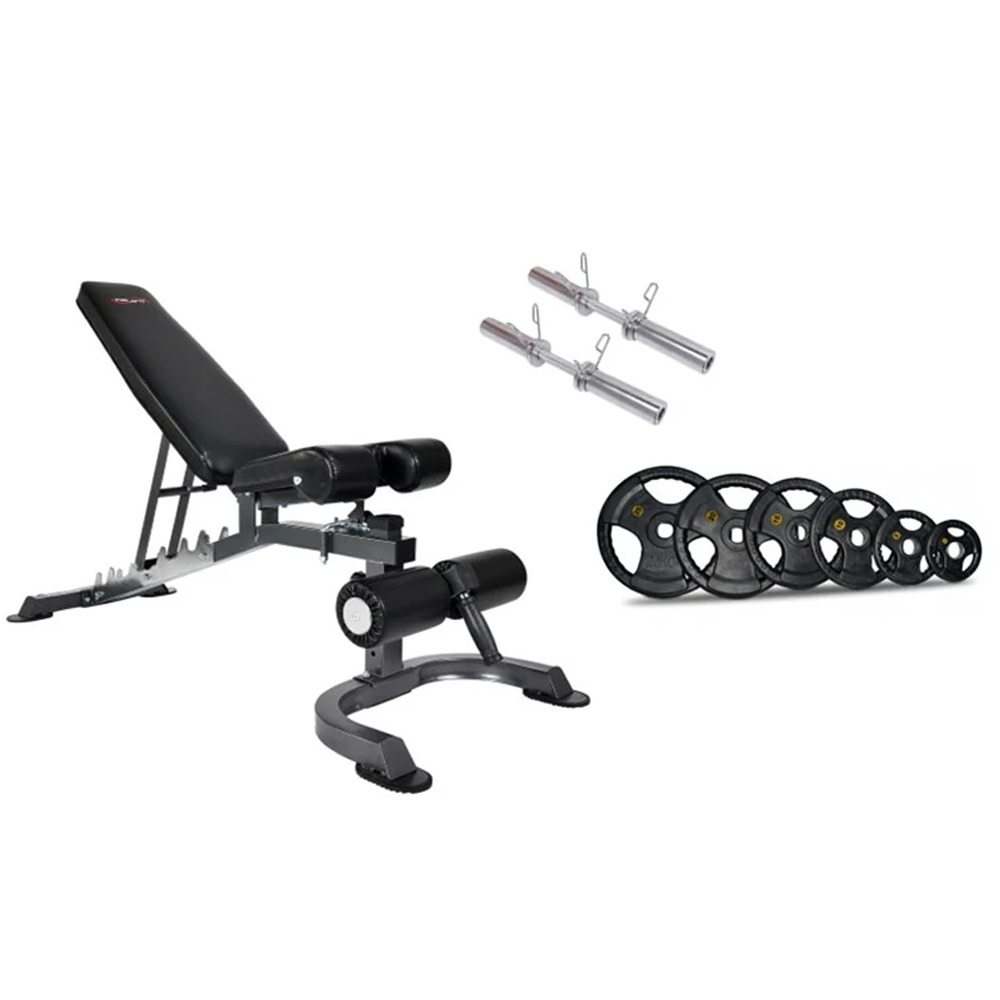
The best Olympic weight plates for a home gym are rubber-coated pairs in the 1.25kg to 25kg range, since they protect your floor, fit every Olympic barbell, and let you add weight gradually as you get stronger.
But which sizes you actually need, whether rubber or bumper plates suit your training style, and how much you should realistically pay for them in Australia are the details that decide whether your home gym setup lasts for years or gets replaced within one.
This guide walks through exactly that. You’ll explore weight plates sizing charts, types, buying criteria, and smart recommendations for every training goal, so you can build a home gym that's genuinely built to last.
What Are Olympic Weight Plates?

Olympic weight plates are strength training plates with a 50mm (2-inch) centre hole, designed to load onto Olympic barbells and Olympic-sleeved dumbbells.
They differ from standard plates in two clear ways:
-
Bigger centre hole: a 50mm diameter, compared to 25mm on standard plates, so they only fit Olympic bars.
-
Wider weight range and sturdier build: since Olympic bars are engineered for heavier, more serious loads than standard bars.
That single measurement decides bar compatibility, every time.
Olympic Weight Plates vs Standard Plates: The Key Difference
The key difference between standard and Olympic weight plates comes down to one number: Olympic plates have a 50mm centre hole, while standard plates have a 25mm hole, and the two are never interchangeable on the same bar.
Olympic plates are the better long-term investment for anyone progressing beyond beginner weights, since Olympic bars and plates are the standard used in almost every commercial gym, PT studio and competition setting in Australia.
|
Feature
|
Olympic Weight Plates
|
Standard Weight Plates
|
|
Centre hole
|
50 mm (2")
|
25 mm (1")
|
|
Compatible with
|
Olympic barbells, power racks, Smith machines
|
Standard barbells only
|
|
Maximum loading
|
High
|
Moderate
|
|
Durability
|
Excellent
|
Good
|
|
Best suited for
|
Home gyms, commercial gyms, serious strength training
|
Casual home workouts
|
Planning to progressively increase your strength or build a home gym over time? Olympic weight plates offer greater flexibility and better long-term value.
For the full breakdown of specs, materials, and pros and cons of each type, see our dedicated guide on Standard vs Olympic Weight Plates in Australia .
Olympic Weight Plate Sizes and Weight Chart (Australia)

Olympic weight plates in Australia are sold in seven standard sizes, ranging from 1.25kg up to 25kg per plate, and are almost always priced and sold in pairs.
|
Plate Weight
|
Hole Diameter
|
Use
|
Approx. Price (pair)
|
|
1.25kg
|
50mm
|
Fine increments, warm-ups, beginners
|
From $14
|
|
2.5kg
|
50mm
|
Progressive overload, accessory lifts
|
From $25
|
|
5kg
|
50mm
|
General strength training
|
From $50
|
|
10kg
|
50mm
|
Intermediate lifts, squats and bench
|
From $100
|
|
15kg
|
50mm
|
Serious strength training
|
From $150
|
|
20kg
|
50mm
|
Heavy compound lifts
|
From $200
|
|
25kg
|
50mm
|
Advanced lifters, powerlifting
|
From $250
|
Rubber Olympic Weight Plates vs Olympic Bumper Plates
Rubber Olympic weight plates and Olympic bumper plates both fit Olympic barbells, but they're built for different training styles. Rubber-coated plates suit general strength training, while bumper plates are designed specifically for Olympic lifting and repeated dropping.
|
Feature
|
Rubber Olympic Plates
|
Olympic Bumper Plates
|
|
Material
|
Steel core, rubber coating
|
Solid rubber with steel insert
|
|
Durability
|
High, if not regularly dropped
|
Very high, built for constant drops
|
|
Noise
|
Moderate
|
Low, absorbs impact
|
|
Floor protection
|
Good
|
Excellent
|
|
Best for
|
General home gym strength training
|
Olympic lifting, CrossFit-style training
|
|
Price (20kg pair)
|
$200 to $250+
|
$180 to $240+
|
For most Perth home gyms doing squats, deadlifts and bench press without dropping the bar overhead, rubber Olympic weight plates are the more cost-effective choice. If your training includes Olympic lifts like the clean and jerk or snatch, bumper plates are worth the extra investment.
What to Look for When Buying Olympic Weight Plates for Home Gym
Buying the right Olympic weight plates comes down to matching material, tolerance and fit to how you actually train, not just picking the cheapest set available.
-
Weight tolerance: Look for plates rated to within about ±3% of their stated weight, so your loading stays accurate as you progress.
-
Hole diameter fit: Confirm the plates have a true 50mm centre hole that matches your Olympic barbell sleeve.
-
Coating and finish: A rubber coating protects both your floor and the plate itself, and reduces noise compared with bare cast iron.
-
Handle design: EZ-grip handles make loading and unloading far easier and safer when you're training solo at home.
-
Durability versus budget: Cast iron is the cheapest option but less forgiving if dropped, while rubber-coated plates cost more but last longer under regular home use.
-
Barbell compatibility: Check your bar's sleeve length can actually hold the total weight you're planning to load.
Now let's match plates to your training goal.
Best Olympic Weight Plates for Every Training Goal
The best Olympic weight plates depend on how you train, your experience level and your goals, so beginners and functional athletes need a different set-up to powerlifters.
➢ Beginners and General Fitness
1.25kg to 5kg rubber plates are the best starting point, letting you build technique and add small, progressive increases without overloading joints.
Shop the 1.25kg pair, 2.5kg pair or 5kg pair.
➢ Strength Training and Powerlifting
10kg to 25kg plates support the heavier compound lifts, such as squats, deadlifts and bench press, that strength and powerlifting programs are built around.
Shop the 15kg pair, 20kg pair or 25kg pair.
➢ Functional Fitness
A mixed range spanning light and heavy plates suits functional and circuit-style training best, where the load changes frequently between exercises and stations.
➢ Best Complete Olympic Weight Plate Set
Buying the full 1.25kg to 25kg range lets you build a genuinely complete home gym in one purchase; with every increment you'll need as you get stronger.
Browse the full Trojan Fitness Olympic weight plates range.
Deciding between a set and single plates? Here's how.
Should You Buy Individual Plates or an Olympic Weight Plate Set?

Shop Weight Sets
Buying an Olympic weight plate set is the easiest and most cost-effective option for new home gym owners, while individual plates suit lifters expanding an existing setup.
-
Pros of a set: better overall value, one straightforward purchase, and the right size increments from day one.
-
Cons of a set: less flexibility if you only need one or two specific weights rather than a full range.
Individual plates suit: lifters who already own some plates and simply need to fill in specific gaps in their range.
How Much Do Olympic Weight Plates Cost in Australia?
Olympic weight plates in Australia cost between $2 and $4 per kilogram for basic cast iron plates, and $8 to $12 or more per kilogram for rubber-coated or bumper plates.
For a standard pair of 20kg Olympic plates, expect to pay anywhere from around $150 for cast iron up to $250 or more for premium rubber-coated or bumper plates, depending entirely on the brand, material and weight tolerance.
Conclusion: Building a Home Gym That Lasts
Olympic weight plates are worth the investment because they support genuine, long-term progressive overload in a way standard plates simply can't.
-
Choose the right sizes early: a 1.25kg to 25kg range covers almost every home gym goal.
-
Prioritise quality over the lowest price: plates you'll use for years should have accurate tolerance and a durable coating.
-
Build your set gradually: start light, add heavier plates as your strength and confidence grow.
Frequently Asked Questions About Olympic Weight Plates
- Are Olympic weight plates sold in kg or lb in Australia?
Yes, Olympic weight plates sold in Australia are almost always denominated in kilograms, in standard increments of 1.25kg, 2.5kg, 5kg, 10kg, 15kg, 20kg and 25kg.
- Can Olympic weight plates fit a standard barbell?
No. Olympic plates have a 50mm centre hole, while standard barbells have a 25mm sleeve, so Olympic plates will not fit a standard bar without a specific adaptor.
- What's the difference between Olympic and bumper plates?
Olympic plates are steel-cored with a thin rubber or paint coating for general lifting, while bumper plates are made from solid rubber and designed to be dropped repeatedly without damage.
- What size are Olympic weight plates?
Olympic weight plates range from 1.25kg to 25kg per plate in Australia, and all sizes share the same 50mm centre hole regardless of weight.
- How much weight should beginners buy?
Beginners generally do well starting with a set of 1.25kg, 2.5kg and 5kg pairs, which allows small, safe increases in load as strength and technique improve.
- Can Olympic weight plates be used in a home gym?
Yes, Olympic weight plates are one of the most popular choices for home gyms because they suit a wide range of exercises and can be added to gradually as your budget or training goals change.
Wondering where to buy Olympic weight plates in Perth?
Tired of guessing which weight plates will actually hold up to your training?
Shop Olympic Weight Plates at Trojan Fitness, Perth
Trojan Fitness stocks rubber-coated Olympic weight plates from 1.25kg to 25kg, built to protect your floor, fit every Olympic barbell, and grow with you as you get stronger.
Whether you're setting up your first home gym or filling gaps in an existing one, our Perth showroom and Australia-wide delivery make it easy to get the right plates, at the right price, without the guesswork.
Explore Quality Strength Training Equipment Now
Disclaimer:
The content on this blog is shared for general information only and is not meant to replace professional or medical advice. While we do our best to keep everything accurate and up to date, we can’t promise that all information is complete or fully reliable at all times. Any action you take based on this content is your own responsibility. It’s always a good idea to speak with a qualified professional before making major changes to your diet, workout routine, or lifestyle. We are not liable for any issues or outcomes that may come from using the information provided here.
 All Payment Methods are Accepted